

Why High Trading Frequency Doesnt Equal High Profits: Understanding Market Discipline
Trading Strategy
Many traders mistakenly equate high-frequency trading with efficient profit-making. They believe that only by frequently entering and exiting the market can they seize more opportunities. Particularly during pullbacks, market noise increases, false breakouts become more common, and erratic price movements occur more frequently. In an effort to be more active, traders often end up increasing their chances of error. The most common outcome is small wins but large losses, along with accumulating commissions and slippage, which gradually erode their capital.
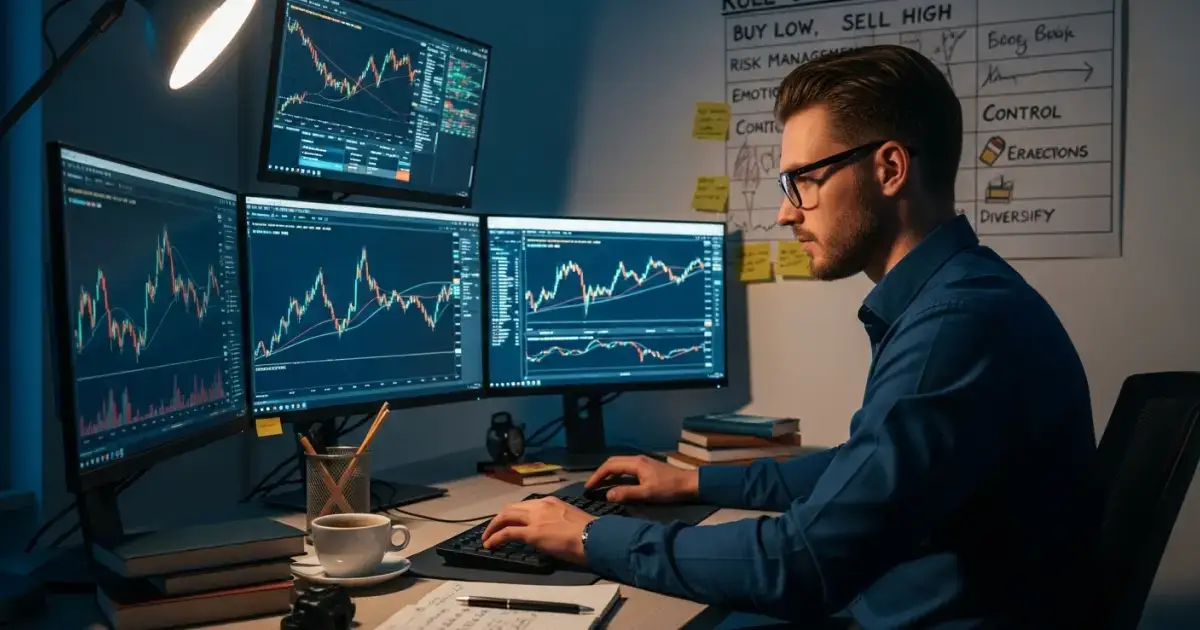
Understanding High-Frequency Trading
First, it’s crucial to understand why high-frequency trading (HFT) cannot be mimicked by human traders. The essence of HFT lies in its speed and precision. It exploits price differences within milliseconds, executing hundreds or even thousands of orders in a short time frame. This model completely exceeds human reaction limits, requiring programmatic trading systems, high-speed market interfaces, low-latency trading channels, quantitative models, and risk control modules.
Given that manual trading cannot rival the speed and frequency of automated systems, the human advantage must shift to selectivity: trading less but trading right and consistently. During pullback periods, the real test is not whether you can catch every market fluctuation but whether you can maintain clarity amid noise. The minute-to-minute price changes can easily evoke greed or fear; without patience, traders may end up being swayed by short-term movements.
The Importance of Patience
Patience is a form of discipline. It allows you to act only when your strategy dictates, when the risk-reward balance is reasonable, and when your stop-loss level is clearly defined. Remember: the market doesn’t always present a worthy opportunity every single day.
However, turning patience into performance requires steadfast execution. Many traders aren’t lacking in planning; their plans are often well-constructed but poorly executed. They may hold positions out of sheer hope when they should be cutting losses, cling to profits too long out of greed, or arbitrarily alter their rules and increase their positions to average down, rendering their trading plans mere paperwork. Execution is the soul of discipline: when it’s time to cut losses, you cut; when it’s time to take profits, you take; and if there are no signals, you remain inactive, refusing to bargain with the market.
Building Patience and Execution Through Small Positions
One of the most effective and safest ways to train patience and execution is through light trading positions. Light trading is not about being conservative; it's about providing yourself with room to develop your skills. When your position sizes are small, your emotional fluctuations are less intense, preventing you from being led by every price movement. By consistently repeating the same process with small positions, you can establish muscle memory, gradually allowing rational decision-making to replace emotional impulsivity. If you can’t maintain discipline with small positions, larger ones will only amplify mistakes, turning minor lapses into significant losses.
In conclusion, recognize that trading is not just about speed and frequency. Instead, focus on developing patience and strict execution of your trading plan. Choose your trades wisely, maintain discipline, and let small positions help you build the necessary skills to navigate the complexities of the market. With the right approach, you can create a sustainable trading strategy that minimizes risks and maximizes your opportunities for success.