

Fibonacci retracement is a technical analysis tool favored by traders across various markets, including stocks, forex, and cryptocurrencies. With its roots in a mathematical sequence discovered over 700 years ago, Fibonacci retracement remains a vital part of modern trading strategies. In this post, we’ll break down what Fibonacci retracement is, how to use it effectively, and why it’s a tool every trader should master.
What Is Fibonacci Retracement?
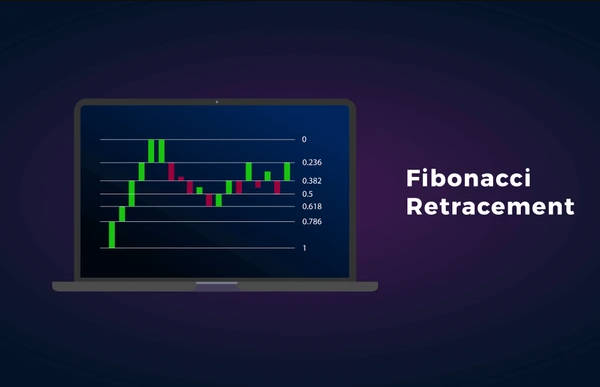
Fibonacci retracement is a method used to identify potential support and resistance levels on a price chart. It uses key Fibonacci ratios — derived from the Fibonacci sequence — to plot horizontal lines at specific percentage levels of a previous price move. The most commonly used Fibonacci retracement levels are:
- 0%
- 23.6%
- 38.2%
- 50%
- 61.8%
- 78.6%
- 100%
Understanding these levels can help you pinpoint entry and exit points in your trading strategy.
The Origin of Fibonacci Ratios
The Fibonacci sequence is a series of numbers where each number is the sum of the two preceding ones, typically starting from 0 and 1. Here’s how the sequence unfolds:
0, 1, 1, 2, 3, 5, 8, 13, 21, 34, 55, 89, 144, ...
The ratios derived from this sequence — primarily 0.618 (the Golden Ratio) and 0.382 — are what traders use to identify potential retracement levels. These ratios show up not only in financial markets but also throughout nature, art, and architecture, reflecting deep-seated patterns in human behavior.
How Traders Use Fibonacci Retracement
To use Fibonacci retracement effectively, draw the tool between significant price points — typically a swing high and a swing low. Here’s how to approach it:
- In an Uptrend: Draw from the low to the high. The retracement levels below the high indicate potential support zones.
- In a Downtrend: Draw from the high to the low, where the levels above the low indicate potential resistance zones.
Traders often look for buying opportunities near the 38.2% or 61.8% retracement levels during a pullback in an uptrend.
What Fibonacci Levels Can Tell Traders
These levels are not guaranteed to cause price reversals; instead, they highlight areas where reactions are more likely. For example:
- If the price retraces to the 38.2% level and shows signs of strength, it might be a good entry point.
- Conversely, if the price fails to hold at these retracement levels, it may indicate a continuation of the trend.
Combining Fibonacci retracement with other indicators amplifies its effectiveness. For instance, using it alongside Elliott Wave Theory can help estimate the depth of corrective moves.
Fibonacci Extensions and Price Targets
Fibonacci can also help project where price might move next. These projections, known as Fibonacci extensions, are used to identify potential profit targets and are typically set at levels such as:
- 138.6%
- 161.8%
- 261.8%
These extension levels can act as take-profit zones during strong trends, allowing traders to capitalize on significant price movements.
Python Function to Calculate Fibonacci
Below is a Python function that takes a time series of historical closing prices and calculates the Fibonacci retracement levels based on the maximum and minimum price values in that series. It returns the retracement levels corresponding to 0%, 23.6%, 38.2%, 50%, 61.8%, 78.6%, and 100%.
def fibonacci_retracement_levels(prices):
    """
    Calculate Fibonacci retracement levels.

    :param prices: List of historical closing prices (list of floats)
    :return: Dictionary of Fibonacci levels and their corresponding price levels
    """
    if not prices or len(prices) < 2:
        return "Input should be a list of at least two historical prices."

    max_price = max(prices)
    min_price = min(prices)

    # Calculate the difference
    difference = max_price - min_price

    # Calculate the Fibonacci levels
    levels = {
        "0%": max_price,
        "23.6%": max_price - difference * 0.236,
        "38.2%": max_price - difference * 0.382,
        "50%": max_price - difference * 0.5,
        "61.8%": max_price - difference * 0.618,
        "78.6%": max_price - difference * 0.786,
        "100%": min_price,
    }

    return levels

# Example usage:
historical_prices = [100, 105, 102, 110, 108, 95, 97]
fibonacci_levels = fibonacci_retracement_levels(historical_prices)
print(fibonacci_levels)
Closing Thoughts
Fibonacci retracement is a powerful tool that blends mathematics, psychology, and market behavior. While it does not guarantee trading success, its effectiveness enhances when combined with disciplined risk management and sound analysis.
Mastering Fibonacci retracement will not only improve your technical analysis skills but also empower your trading strategy—helping you navigate the market with confidence.