

Hong Kong’s sky-high property prices and volatile interest rates have left young professionals stuck in one of life’s biggest financial dilemmas: rent or buy? A recent viral social media post laid bare the generational divide—older generations insist “rent is money down the drain” and urge buying at all costs, while young people worry about crippling mortgage payments, hidden fees, and lost financial freedom.
In this in-depth guide, we break down how interest rates vs mortgage rates and opportunity cost directly shape your rent-or-buy decision. We use real 2026 Hong Kong market data, monthly cost comparisons, and long-term wealth math to help you choose what’s right for your finances and lifestyle.
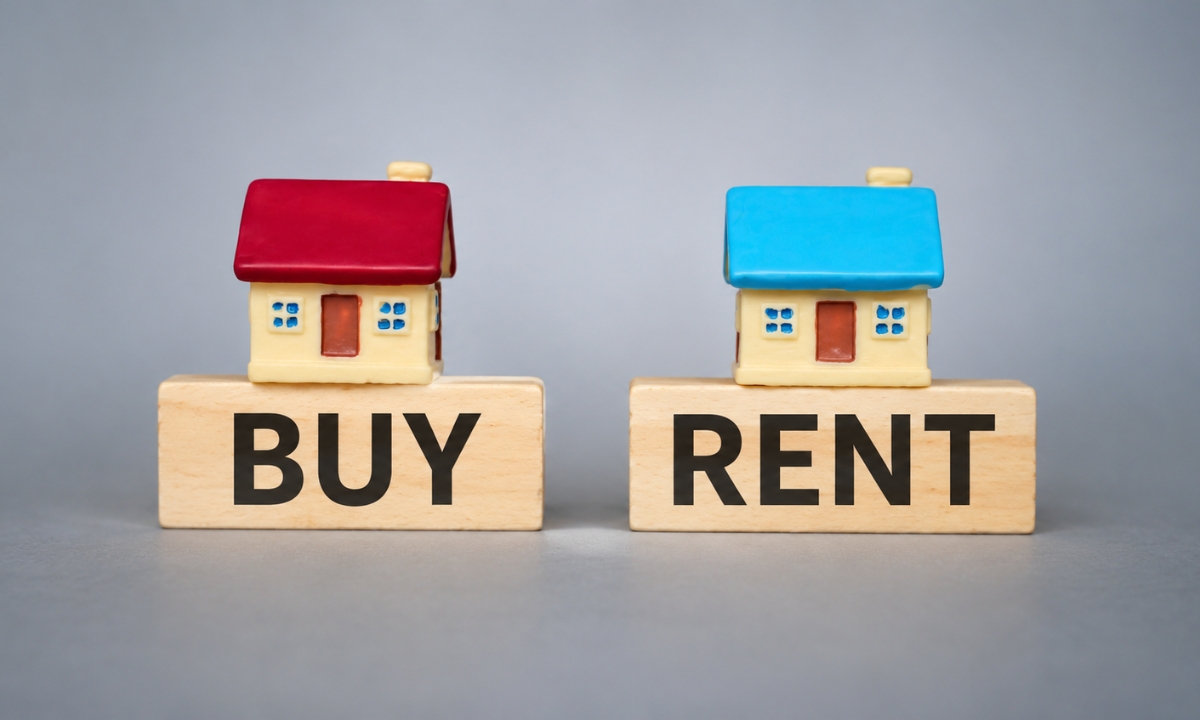
Interest Rate vs Mortgage Rate in Hong Kong 2026: What’s the Difference & Why It Matters
First, let’s clarify the two key rates driving your housing costs—they are not the same, and they directly impact your monthly cash flow.
1. Base Interest Rates (HIBOR / Prime Rate)
Hong Kong’s mortgage pricing is tied to 1-month HIBOR and the Prime Rate (P). As of 2026:
- 1-month HIBOR ≈ 2.68%
- Prime Rate (P) at major banks: 5.625%–5.875%
These are the benchmark rates that influence savin yields, investment returns, and variable mortgage costs. When base rates rise, savings and fixed-income returns go up—making the opportunity cost of tying cash into property even higher.
2. Actual Mortgage Rates You Pay
Most Hong Kong homebuyers use HIBOR-linked mortgages (H+1.3%) with a capped rate (often P-2% ≈ 3.5%–3.6%). For a HK$6–7 million property (typical mid-range private flat):
- Loan amount: ~HK$4.8–5.6 million (80% LTV)
- Monthly mortgage payment: HK$28,000–$33,000 (30-year term)
- Compare to monthly rent for a similar flat: HK$22,000–$25,000
That’s a HK$6,000–$8,000 monthly gap—before adding management fees, rates, maintenance, and insurance. When mortgage rates rise, this gap widens, making buying far more expensive month-to-month.
The generational clash makes sense: older buyers often bought in low-rate, low-price environments, while today’s young buyers face high entry costs and rate uncertainty.
Hidden Costs: Buying Isn’t Just Mortgage—Renting Isn’t “Wasted Money”
Many buyers only calculate the mortgage payment, but homeownership comes with recurring expenses that renters avoid entirely. For a HK$6.5 million private apartment:
| Cost Item | Renting | Buying |
|---|---|---|
| Monthly Housing Payment | HK$23,000 (all-in) | HK$30,000 (mortgage) |
| Management Fee | Included | HK$2,500 |
| Rates & Government Rent | Included | HK$1,600 |
| Maintenance/Repair Reserve | None | HK$1,500 |
| Total Monthly Outflow | HK$23,000 | HK$35,600 |
Monthly difference: ~HK$12,600
This gap is where opportunity cost becomes a game-changer.
Opportunity Cost: The Single Most Overlooked Factor in Rent vs Buy
Opportunity cost is the return you could have earned if you invested your money instead of sinking it into a down payment and higher monthly housing costs. For Hong Kong young people, this is make-or-break.
Let’s use a realistic example:
Buying Scenario
- Down payment + stamp duty + fees: HK$1.3–1.45 million upfront
- Monthly extra cost vs renting: ~HK$12,600
- Asset: A property you own, with potential capital appreciation
Renting + Investing Scenario
- Keep the HK$1.3–1.45 million down payment in a diversified portfolio (index funds, bonds, dividend stocks)
- Invest the monthly HK$12,600 gap
- Conservative long-term return: 4%–6% p.a. (easily beats rental yield in Hong Kong, which averages 2.6%–4.2%)
Over 10 years:
- The invested down payment alone grows to ~HK$2.1–2.6 million
- The monthly invested gap adds ~HK$1.8–2.2 million
- Total portfolio value: ~HK$4–4.8 million
For buyers to come out ahead, property appreciation must outpace this investment return plus all ownership costs. In a flat or slow-growth market, renting and investing often wins.
Why Some Still Insist on Buying: Stability vs Flexibility
The online debate split sharply into two camps—both rational, based on priorities:
Pro-Buying Camp: Long-Term Security & Asset Building
- No risk of eviction or sudden rent hikes
- Build equity; the property is fully yours after mortgage repayment
- Intergenerational wealth transfer for children
- Hedge against inflation and rental market volatility
Pro-Renting Camp: Cash Flow, Freedom & Quality of Life
- Preserve capital for career growth, business, or global mobility
- Avoid being “house-poor” and sacrificing lifestyle
- Invest spare cash for higher returns than property yield
- Flexibility to move for jobs or relocate (e.g., retire in mainland China)
Young Hong Kong professionals increasingly choose rent, Public Housing, or Home Ownership Scheme (HOS) flats to avoid the lifelong burden of private property mortgages.
Who Should Rent? Who Should Buy? 2026 Decision Framework
Rent If You:
- Plan to stay in Hong Kong short-term (≤5 years)
- Want maximum financial flexibility and liquidity
- Prefer investing capital in stocks, funds, or business
- Are not ready for upfront costs and ongoing maintenance
Buy If You:
- Plan to settle long-term (≥10 years)
- Value stability over liquidity
- Can comfortably afford mortgage + fees without cutting essential spending
- Believe in long-term Hong Kong property appreciation
Final Thoughts: Stop Following Tradition—Follow the Math
Hong Kong’s housing debate is no longer just about “traditional values.” It’s about interest rate math, monthly cash flow, and opportunity cost. For young people in 2026, buying a home is not automatically a “must”—it’s a financial decision that must beat the alternative of renting and investing.
Before you listen to “you must buy” advice, run the numbers: calculate your real mortgage cost, compare to rent, and estimate what your down payment could earn in investments. The best choice is the one that aligns with your financial goals, not someone else’s tradition.
What’s your call—rent or buy? Share your thoughts and calculations in the comments below.